Bolero
- Understand bolero within the context of popular music/dance
- Explain the differences between Cuban bolero and danzon-mambo
- Gain an awareness of how bolero became popular among lovers
- Experience the steps of bolero
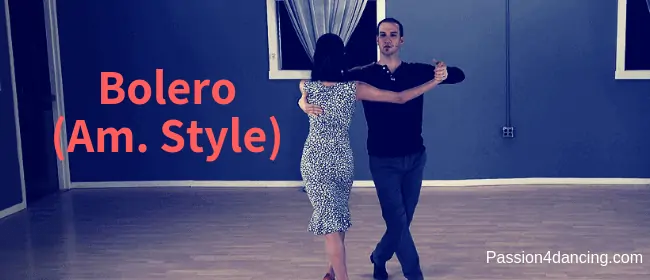
The Bolero is the slowest of the American Rhythm Latin dances. In this dance the partners push off their feet strongly in order to make big steps and there is a rise and fall used through out. Lastly, this dance has a lot of upper body shaping (similar to Waltz and other smooth dances).(3)
IV
A Note to Remember
In traditional Cuban bolero, the fusion of Spanish and Afro-Cuban elements is complete.(2)
V
Case Studies
Doris de la TorreElena Burke
https://youtu.be/Tf7HZStpFGw?si=Blb-Q_EU4eILAQdZ
Olga Gillot
https://youtu.be/3Vne7dNUszw?si=ME27FAWnwn4BoKM1
Vecentico Valdes
https://youtu.be/k7IJpwOjYTY?si=6w5UwRRGPouzdCwC
Tejedor y Luis
https://youtu.be/B88ttIT2mEM?si=8zeC9LdAh9Vleno9
Fernando Albuerne
https://youtu.be/_1Qbypri35k?si=wAe7fguF_LOcGf89
VI
Activity
Students learn the basic bolero step
VII
Journaling
VIII
Glossary
IX
Sources
1. Party, Daniel (2014). Horn, David; Shepherd, John (eds.). Bloomsbury Encyclopedia of Popular Music of the World, Volume 9: Genres: Caribbean and Latin America. Bloomsbury Publishing. pp. 62–67.
2. Orovio, Helio (2002). Cuban Music from A to Z. https://www.google.com/books/edition/Cuban_Music_from_A_to_Z
X
Students' Work

Comments
Post a Comment